Photography Tips · Brussels
Portfolio Shoot for Make-up Artists: What to Plan Before the Day
A make-up artist's portfolio has one job: show your work so clearly that a bride or a brand can judge it from a phone screen. That means planning a few distinct looks, booking a model who agrees in writing to how the photos will be used, and shooting in light precise enough for skin and texture. Then keeping the retouching light, so your make-up is what people see.
Decide what the portfolio is for
Before choosing looks, I'd ask who you want to book you next. Bridal clients look for soft, long-lasting make-up on real skin. A beauty brand looks for precision and a clean finish. One session can't show everything, so I'd pick two directions and do them well.
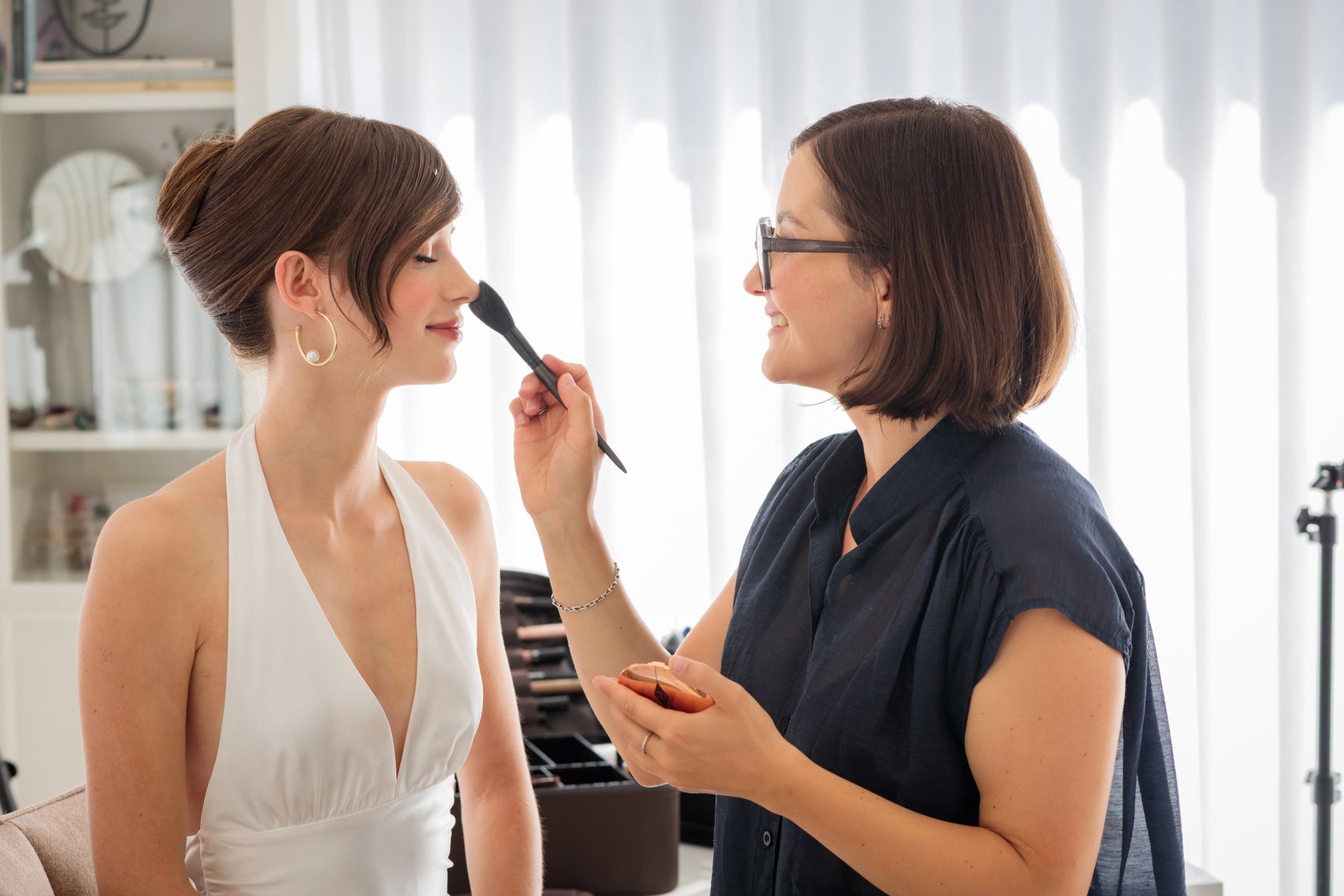
Bring references: a few images you like and a few you don't. They save a lot of time during the shoot, and they help me choose the light before the model even sits down.
Plan the looks and the timing
Each change of look takes time in the chair, and that time is part of the booking. The minimum is two hours, billed by the hour, and the number of looks is something we agree before the day. I'd usually go from the lightest look to the strongest, because removing a dark smoky eye and starting fresh eats into the schedule.
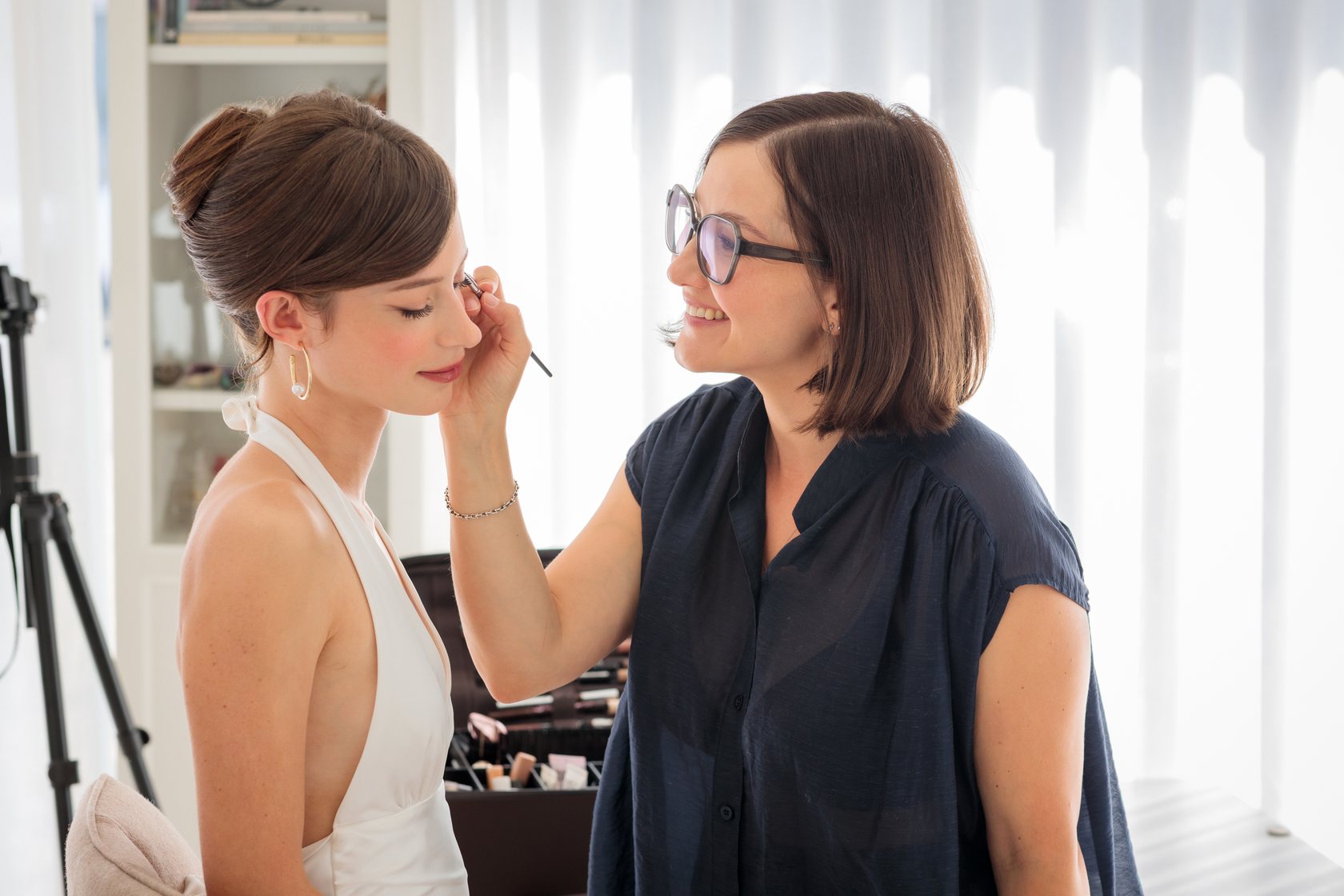
Plan the hair too. A clean, simple hairstyle keeps attention on the face. If you're working with a hairstylist, bring them into the planning early.
The model and her consent
The model, the products and your kit come from your side. Choose a face that suits your directions, and skin you'd like to work on. Most importantly, put in writing how the photos may be used: your portfolio and hers, with credits for both of you.
Briefing the model properly matters as much as the make-up itself. I've written about that in how to brief a model before a beauty shoot.
Light that shows your work
A beauty session needs very precise light. I use it to show the texture of the skin and the clean edge of a liner. Every look gets a full-face frame, then closer details of the eyes and lips.
I'll show you the back of the camera after the first frames of each look. If a lash is lifting or there's a crease in the foundation, we fix it then, not in retouching later.
Phone photos under a ring light are perfectly fine for your daily stories. For a portfolio the difference is in the detail: on a large screen a client can see how the foundation sits and where the blending ends, and that's what a precise light makes visible.
Retouching that keeps your make-up
For a make-up portfolio, heavy retouching works against you. If the skin is smoothed until the foundation disappears, a client can't see your work. Every successful frame gets basic retouching, and beauty retouching is added per image on the ones you choose.
Photos arrive in a private online gallery, and beauty retouching time depends on how many images you pick and how complex they are. Rights for web and social media are included. The session is described on the fashion photography page, and the rates on the price list.
Planning a portfolio shoot as a make-up artist?
See my estimate