Photography Tips · Brussels
Photographing Body Treatments (LPG, Facials) with Dignity: Consent, Angles and Privacy
You can photograph a body treatment without exposing the person on the table. I get written consent before the camera comes out, I choose angles where you see the treatment rather than the body, and the client looks at the selection before anything goes online. That's the whole method, really.
Why this is harder than a haircut
A client walks out of a hair salon happy to show her new cut. On a treatment table it's another story. She's lying down, often in a robe or a disposable suit, and she didn't come to be looked at.
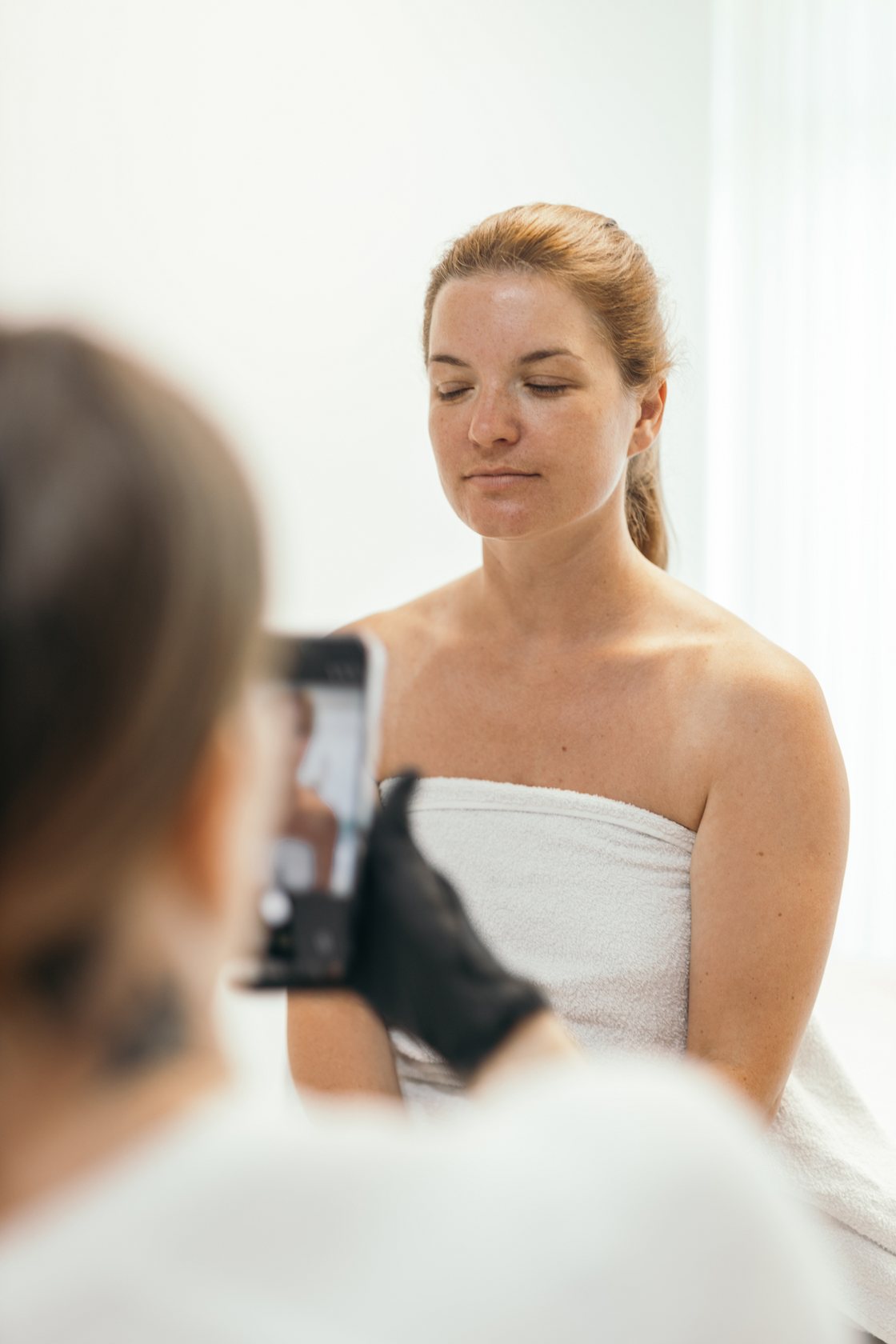
So I don't try to show the body. I try to show why the treatment can be trusted: the clean cabin with the towel folded at the foot of the table, the specialist's hands, the device with its settings screen lit up, a bottle of oil on the trolley. If those are in the frame, the photo has done its job.
Consent comes before the camera
Anyone recognisable signs a written agreement before I take a single frame, and the form says where the images will appear (website, Instagram, the Google profile). A quick verbal yes in the middle of an appointment isn't enough. It doesn't protect her, and it doesn't protect you either.
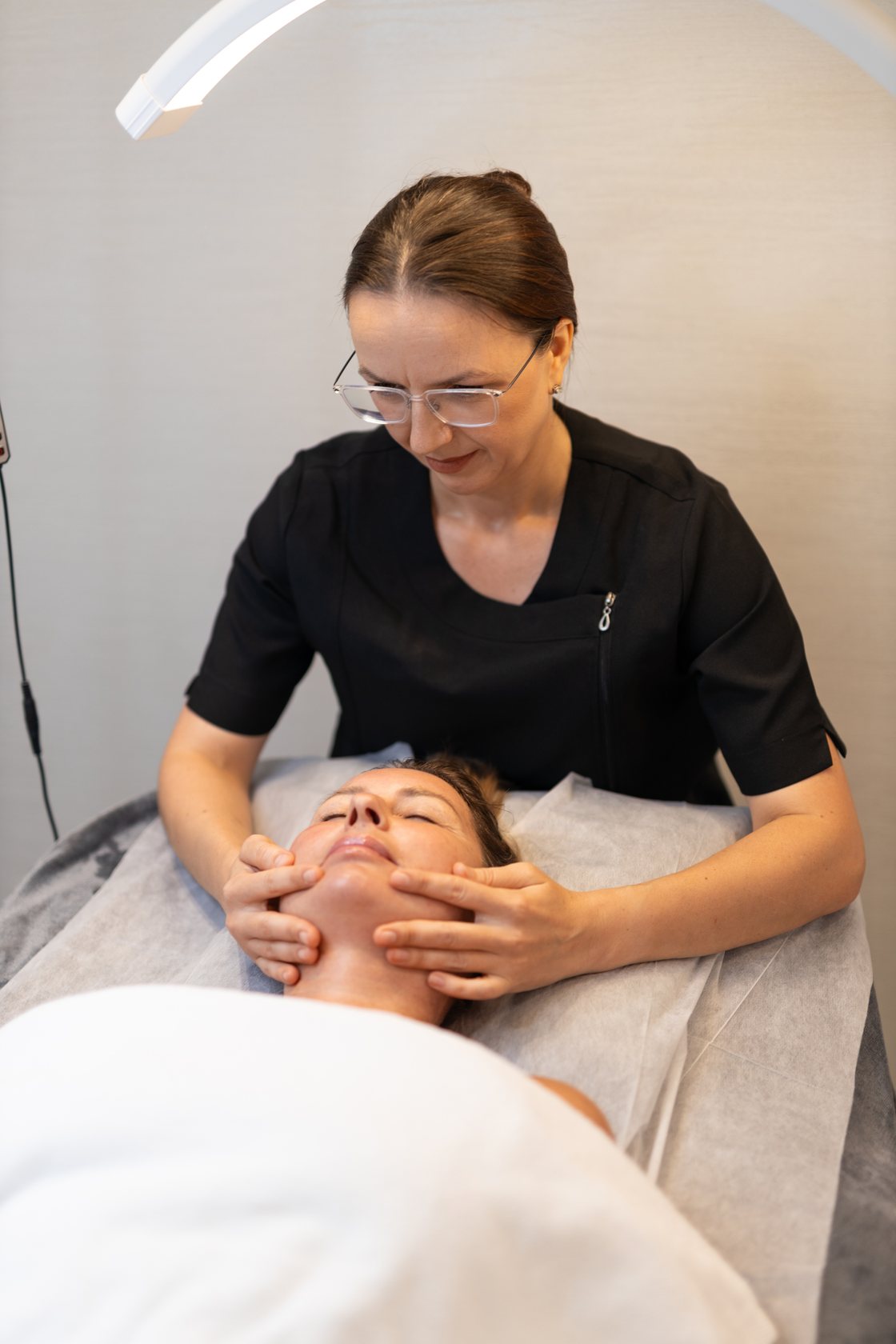
I add one promise of my own. The person sees the selection and can remove any image before it's published, no explanation needed. People relax when they know that, and it shows in their faces. The paperwork itself is explained in model release forms explained.
Angles that show the work, not the person
For LPG I usually go close. The head of the device resting on a leg in the treatment suit. The specialist's hand on the controls. You understand exactly what's happening without seeing a whole body, and honestly these frames often look better than the wide ones.
Facials are easier to keep private than people expect. A side profile with eyes closed, a towel wrapped around the hair, soft light from the window: calm and discreet. Straight-down shots over the face I keep for a booked model who's comfortable with them. For the wide view of the room, I'd rather have the table made up and nobody on it.
Who should be on the table
The simplest option is a booked model, or someone from your team who actually wants to do it. A regular client can work too, as long as she volunteers. Asking her halfway through her own appointment isn't volunteering.
And a client who simply came for her treatment is never photographed. If nobody's available, I photograph the specialist preparing the cabin: laying out the towels and switching the device on. A new client still gets to see the real cabin she'll be lying in.
On the day itself
I work with the door closed. Only the people the model wants in the room stay in it, and there's a robe on the chair between set-ups. If she wants to see the back of the camera, we look together. Nothing leaves the salon before she's approved the selection.
These sessions usually fit into a quiet morning along with the rest of the salon. What a commercial session includes is on the commercial photography page, and the formats are on the price list.
Planning photos of your treatments in Brussels?
See my estimate