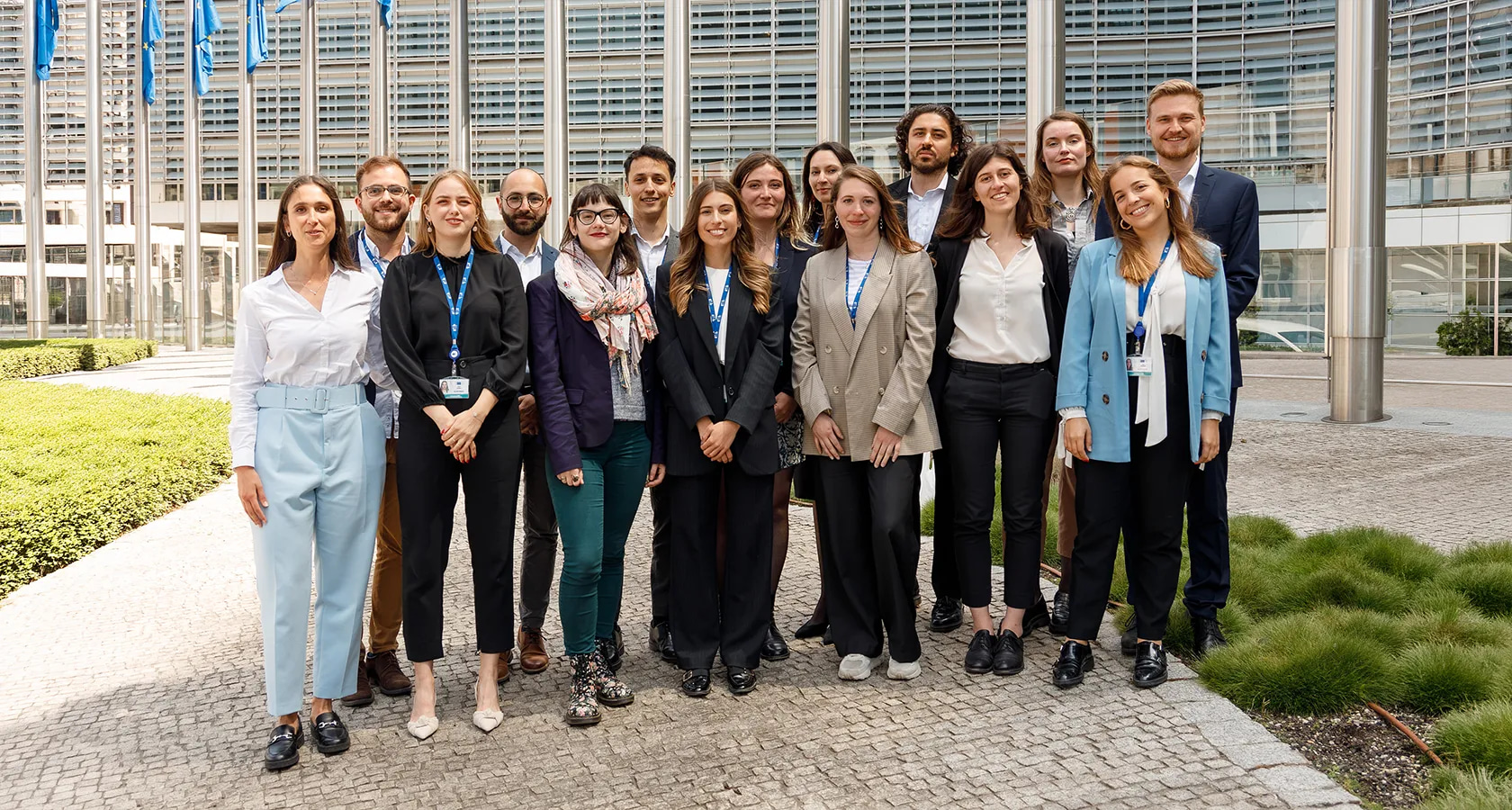
Event Photography in Brussels
Conferences, product launches, ceremonies and corporate events across Belgium. Covered without interrupting the programme, delivered with basic retouching and ready to publish within 72 hours — or within 24 hours for +30 %.
VIEW PORTFOLIOConference and Seminar Photography
Full coverage of the programme — speakers, room, audience and the conversations between sessions — delivered with basic retouching, ready to publish within 72 hours — or within 24 hours for +30 %.
A conference exists once. There is no second take of the keynote, of the handshake at the signing, or of the reaction in the third row. The photographs are the only record your organisation keeps, and the only material your communications team will have to work with for the following year — in the report, the next edition's invitation, and every social post that refers back to it.
That changes what coverage has to mean. Photographing only the stage produces a set that proves someone spoke and nothing else. What a communications team actually runs out of is the rest: the room seen from the back with seats full, the audience listening rather than posing, the exchanges in the coffee break where the value of the event is visible. Those frames are what make next year's invitation credible.
Working a conference means not being part of it. Silent shutter, no flash during talks, no request to anyone to repeat a moment, and a position that never appears in someone else's video feed. Organisers judge a photographer on whether the programme ran as if nobody was covering it.
Coverage runs in English, French or Russian, in Brussels and across Belgium, in the institutions and venues where accreditation and access rules have to be handled before the day rather than at the door.
How many hours do we actually need to book?
Fewer than the length of the programme, usually. The hours that matter are the opening, the keynotes, the breaks and the closing — not the parallel session on procurement at 15:40. Send the programme and you will get an hours recommendation before a quote, not after.
Our press release goes out the same evening. Is that realistic?
Not the same evening. A full day of coverage does not allow it, and promising otherwise is how photographers end up sending unusable files at midnight. What you receive is a selection with basic retouching, ready to publish within 72 hours — or within 24 hours for +30 %. If a release genuinely has to go out that night, say so at briefing and a short list of agreed key moments is prepared as a separate priority.
There is no rehearsal. How do we know the key moments will be captured?
Because they are agreed in writing beforehand. You name the moments that must exist — the signature, the award, the two people who have to appear in the same frame — and they are on a list, not left to judgement in a dark room. A photographer who does not ask for that list is planning to improvise.
Do we need consent from attendees, and who is responsible?
You do, as the organiser, and it is handled before the day: a line on the registration form and a notice at the entrance. We can provide the wording. Speakers and VIPs are worth confirming individually — it is one email and it prevents a request to withdraw a published photograph.
Our team already takes photographs on their phones.
They do, and those have a place. What they cannot do is cover the programme, because your colleague with a phone is also working the event — the moment they stop to photograph the panel, they stop registering guests. That is the real cost, and it is not the picture quality.
Award Ceremony Photography
The handshake, the trophy and the face of the person receiving it — captured on stage lighting, without flash, and delivered while the winners are still posting about it.
An award ceremony compresses everything difficult about event photography into about ninety seconds per winner. The lighting is designed for the audience rather than for a camera, the moment is short, the person is moving, and there is no possibility of asking for it again. Whether it works is decided by where the photographer stands, which is decided before the room fills.
Three frames matter for each recipient and they are not interchangeable: the handshake, the trophy held clearly enough to be identifiable, and a portrait-style frame of the winner alone that they will actually use. The third is the one most often missing, and it is the one the winner posts, tags and keeps — which is how a ceremony continues to circulate after the evening ends.
No flash during the ceremony. Beyond being disruptive, it destroys the stage lighting your production team built and makes every image look like a press scrum. Working with the light as designed takes more preparation and produces photographs that match the event you actually staged.
Delivery matters here more than at any other event type, because a winner wants to post while it still counts. The selection comes back with basic retouching, ready to publish within 72 hours — or within 24 hours for +30 %, and winners can receive their own frame directly if you decide that at briefing. Group frames of all recipients, sponsors and the host are covered as a matter of course — they are the images the sponsor asks for the following morning.
We only need the stage. Can we book just that hour?
The minimum booking is two hours, and for a small ceremony that is usually the right call. Be aware of what it excludes: arrivals, the sponsor's wall, the room before it fills, and the group photograph that everybody asks for afterwards. Those are the frames most often requested a week later, when they no longer exist.
Winners will post tonight. How fast can they have their photograph?
A selection goes out within 72 hours, or within 24 hours with express delivery (+30 %), and for ceremonies it is worth agreeing in advance whether winners receive files directly or through you. Sending them their own frame quickly is the cheapest goodwill available at an awards event.
The stage lighting is difficult. How do we know the results will be usable?
Ask to see award coverage shot without flash under stage light — not a portfolio grid, full-size files. Difficult lighting is where the difference between photographers is visible, and it is visible immediately.
Sponsors expect their branding to appear. Who makes sure of that?
It goes on the shot list in the brief: which logos, which banners, which people beside which sponsor. Sponsor obligations are contractual on your side, so they are treated as required frames rather than as something to catch if it happens.
Last year our photographs were fine. Why plan differently?
If the winners used them, they were fine. The question worth asking is whether you received the individual winner portraits and the full group frame — those two are what most ceremonies discover missing, and they are missing by omission rather than by failure.
Team Building and Company Day Photography
Your team as they actually are on the day — used afterwards for recruitment, the intranet and the careers page, which is where most of this material ends up.
Team building days are photographed for two audiences at once, and they pull in opposite directions. The internal audience wants the day as it felt: people laughing, the awkward game, the group at the end. The external audience — candidates on your careers page — wants evidence that this is a place where people get along, and that reads as false the moment it looks arranged.
The way to serve both is to cover the day rather than stage it. Nothing is repeated for the camera, nobody is grouped for a photograph they did not expect, and the one deliberately organised frame is the full group at the end, when everyone is already together and nobody has to be gathered.
Consent needs more care here than at a client-facing event. Employees are being photographed at what is nominally work, in informal situations, and the images may end up on a public careers page. That is handled before the day with a short note circulated internally, and anyone who prefers not to appear is simply not photographed — which is easier for everyone than removing them from a published campaign later.
If the purpose is a consistent set of team portraits rather than coverage of a day, that is a different setup and a different result — see team and group portraits.
This is an internal day. Does it justify an external photographer?
Only if the images have a job afterwards — a careers page, a recruitment campaign, an intranet that nobody currently opens. If they are for the team's own memory, a phone and a shared album do the work honestly and cost nothing.
The day is already scheduled. How much notice do you need?
Little, for coverage. What does need lead time is the internal consent note, because it has to reach people before the morning rather than being explained at the start of the day when a photographer is already standing there.
How do we avoid the pictures looking staged and corporate?
By not staging them. The single organised frame is the group at the end; everything else is the day as it happens. Staged enthusiasm is recognised instantly by candidates, and it damages a careers page more than having no photographs at all.
What if an employee does not want to be in the photographs?
They are not photographed, and nobody has to justify the preference. That is why the note goes out beforehand — it lets people say so privately instead of having to step out of frame in front of colleagues.
We want portraits of everyone as well. Same day?
Possible but rarely a good idea: consistent portraits need a controlled setup and a queue, which is precisely what a team building day is not. It works better as a separate short session — see team and group portraits.
Our Workflow: From Brief to Delivery
-
Brief & Consultation
We start with a discovery call or written brief to understand your goals, brand identity, and the story you want to tell. We align on style, mood, locations, and deliverables — so there are zero surprises on the day.
-
The Photo Session
On the day of the shoot, we arrive prepared and professional. Whether it's a studio portrait session, an on-location event, or a multi-hour corporate reportage — we guide and capture without disrupting your flow.
-
Editing & Delivery
High-end retouching and colour grading delivered within 72 hours via a private online gallery. You select your favourites, we finalise the files in the formats you need — web, print, or social media.
Conferences and seminars, product launches, award ceremonies, networking evenings, trade shows and team days — covered without interrupting the programme, with a selection delivered within 72 hours, basic retouching included and ready to publish. Tell us the date, the venue and what your team needs to publish afterwards: availability confirmed and a fixed quote within 8 working hours.
Turning your ideas into powerful visuals.
Every business has a unique story to tell. Let's discuss your vision and deliver photos that genuinely reflect your brand's character.